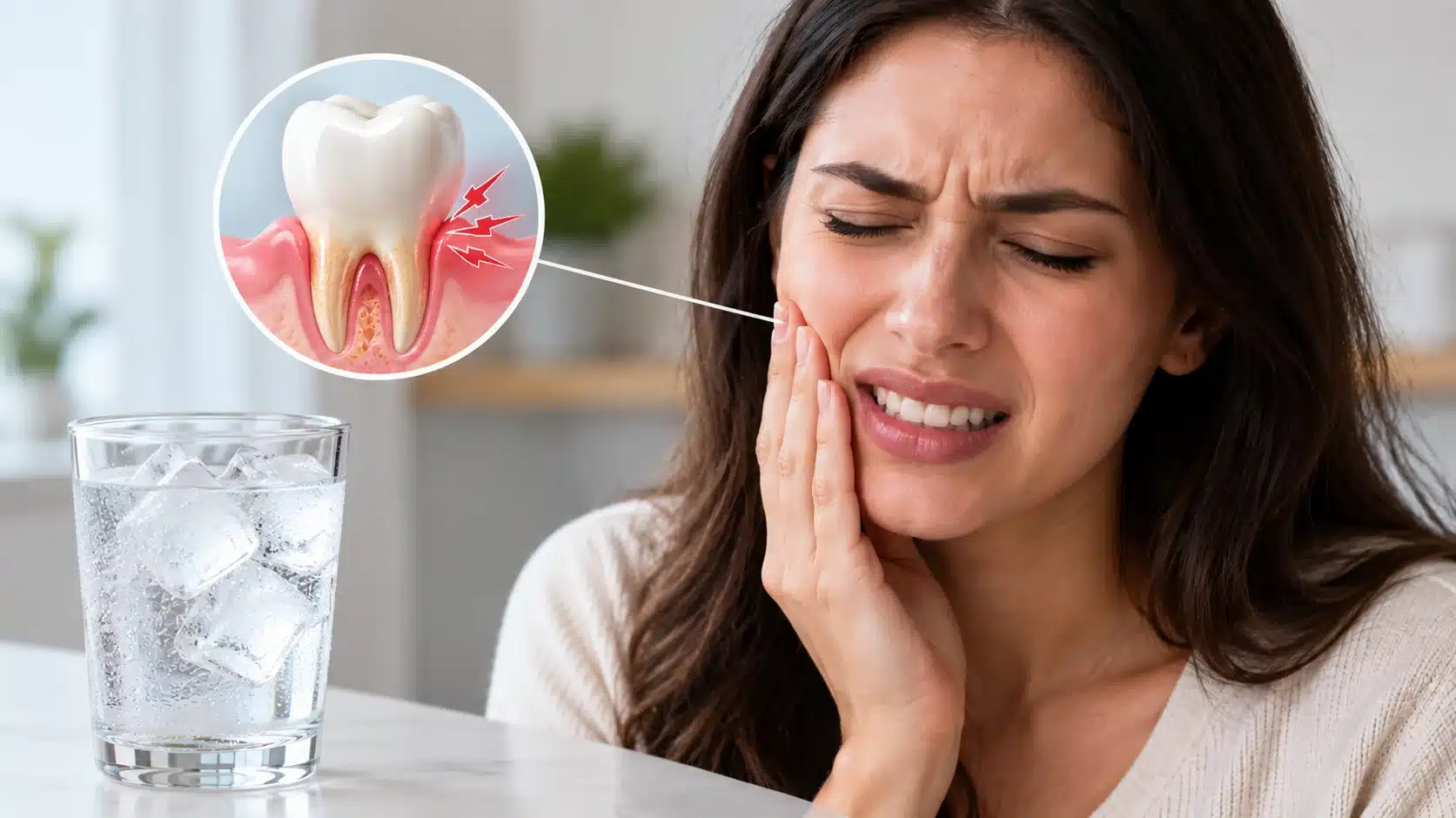
Tooth sensitivity, known clinically as dentin hypersensitivity, is a short, sharp pain that occurs when the dentin layer of a tooth becomes exposed to the oral environment. Underneath the hard, protective enamel and below the gum line lies dentin, a softer layer filled with microscopic tubules that lead directly to the tooth’s nerve centre. When enamel wears away or gums recede, these tubules become exposed, and everyday triggers such as cold air, hot drinks, sugar or even brushing can send a quick, sharp pain signal straight to the nerve.
This mechanism, often referred to as the hydrodynamic theory of tooth sensitivity, is well documented in dental research, which describes how fluid movement inside these exposed tubules activates nerve fibres and produces the sudden pain response patients describe. Understanding this is important because it explains why sensitivity is a symptom of an underlying issue, whether that is enamel erosion, gum recession or an untreated dental problem, rather than a condition on its own.
What Does the Research Say About Tooth Sensitivity?
Tooth sensitivity is far more common than most people realise, and dental research consistently confirms this. A study published in the Journal of the American Dental Association found that roughly one in eight patients experienced dentin hypersensitivity, and that it was notably more common among younger adults, women, and patients with gum recession or a history of at-home teeth whitening.
A separate observational study on dentinal hypersensitivity found that sweet foods and cold or hot stimuli were the most frequently reported triggers among patients, reported by the vast majority of those surveyed, while vigorous or aggressive tooth brushing was identified as a contributing factor in nearly half of the cases studied.
What these studies collectively confirm is that tooth sensitivity is rarely random. It is closely tied to identifiable, and in most cases preventable, habits and conditions, which is genuinely good news for anyone currently dealing with it.
Common Causes of Sensitive Teeth
Several everyday habits and dental conditions can gradually expose the dentin layer and trigger sensitivity. Recognising which of these applies to you is the first step toward effective prevention.
- Brushing too hard or using a medium or hard-bristled toothbrush wears down enamel over time.
- Frequent consumption of acidic foods and drinks like citrus, soda and wine erodes enamel.
- Gum recession exposes the tooth root, which has no protective enamel covering at all.
- Teeth grinding or clenching, known as bruxism, gradually wears down enamel and dentin.
- Untreated tooth decay or cracked teeth can expose dentin directly at the site of damage.
- Recent teeth whitening treatments can cause temporary sensitivity in some patients.
- Gum disease and plaque buildup near the gum line contribute to gradual root exposure.
Dentist-Backed Ways to Prevent Sensitive Teeth
The good news is that most causes of tooth sensitivity respond well to consistent preventive habits. Here is what dentists actually recommend, based on both clinical experience and the research on what drives sensitivity in the first place.
Switch to a Soft-Bristled Toothbrush
Since aggressive brushing is one of the most consistently reported contributors to sensitivity across studies, switching to a soft-bristled brush and using gentle, circular strokes rather than hard back-and-forth scrubbing is one of the simplest and most effective changes you can make.
Use a Desensitising Toothpaste
Toothpastes formulated with potassium nitrate or stannous fluoride work by blocking the microscopic tubules in exposed dentin, gradually reducing the nerve’s response to triggers. Consistent use over several weeks, rather than a single application, is usually needed to see a noticeable reduction in sensitivity.
Cut Back on Acidic Foods and Drinks
Since acidic foods and drinks are among the most frequently reported triggers linked to enamel erosion, limiting citrus fruits, carbonated drinks, wine and vinegar-based foods, or rinsing your mouth with water after consuming them, helps protect enamel from further wear.
Avoid Brushing Immediately After Acidic Meals
Brushing right after consuming something acidic can actually make things worse, since enamel is temporarily softened and more vulnerable to abrasion. Waiting around thirty minutes before brushing allows saliva to naturally neutralise the acid first.
Wear a Night Guard if You Grind Your Teeth
If bruxism is contributing to your sensitivity, a custom-fitted night guard prevents further enamel and dentin wear while you sleep, addressing the root cause rather than just masking the discomfort.
Treat Gum Disease and Recession Early
Since gum recession is one of the strongest predictors of sensitivity identified in dental research, addressing early gum disease through professional cleaning and improved oral hygiene helps prevent further root exposure before sensitivity worsens.
Avoid Overusing Whitening Products
At-home whitening treatments, especially when used excessively or without professional guidance, are associated with a higher likelihood of sensitivity. Using whitening products only as directed, or under the supervision of a dentist, reduces this risk significantly.
When Sensitive Teeth Need a Dentist, Not Just a Toothpaste
While desensitising toothpaste and better habits resolve many mild cases, sensitivity that is sudden, severe, localised to one tooth, or accompanied by visible damage usually points to a specific underlying issue that needs professional treatment rather than home management alone.
- Sensitivity that persists for more than two to three weeks despite home care changes.
- Sharp pain isolated to a single tooth rather than spread across multiple teeth.
- Visible cracks, cavities or receding gums that continue to worsen over time.
- Pain that occurs spontaneously without any obvious trigger like hot or cold food.
In these cases, a dentist can identify the exact cause through a clinical examination and recommend targeted treatment, which may include fluoride varnish application, bonding to cover exposed root surfaces, gum grafting for significant recession, or in more advanced cases, microscopic root canal treatment if decay or damage has reached the nerve of the tooth.
How Amend Dental Approaches Tooth Sensitivity
At Amend Dental, sensitivity is never treated as a standalone complaint but investigated as a symptom with a specific, identifiable cause. A proper diagnosis begins with checking for enamel wear, gum recession, cavities and bite issues before recommending treatment, ensuring that patients get a solution matched to their actual cause rather than a generic fix. For patients whose sensitivity is linked to alignment or bite pressure, the clinic also offers invisible aligners as part of a broader treatment plan, while patients dealing with enamel or aesthetic concerns alongside sensitivity are often guided toward smile correction once the underlying sensitivity has been addressed.
Finding the Right Dental Clinic for Sensitivity Treatment in Kerala
Because sensitivity has so many possible underlying causes, an accurate diagnosis matters more than any over-the-counter product. A reliable dental clinic in Kozhikode should take the time to examine your enamel, gums and bite before recommending treatment, rather than defaulting to a generic desensitising gel.
Sensitive Teeth Are Preventable, Not Permanent
Sensitive teeth can feel frustrating and, at times, genuinely painful, but the research is clear that most cases are linked to identifiable, manageable causes, from brushing habits to gum health to diet. Making a few consistent changes, switching your toothbrush, adjusting your diet slightly, using the right toothpaste, and not ignoring gum recession, can meaningfully reduce or eliminate sensitivity for most people. And when home care is not enough, a proper dental evaluation ensures the actual cause gets treated rather than just the symptom.
Struggling With Sensitive Teeth? Get an Expert Diagnosis
If sensitivity has been affecting your daily meals or drinks, do not just mask it with another toothpaste. Amend Dental, a trusted dental clinic in Calicut, can identify the exact cause of your sensitivity and recommend a treatment plan built around it.
Frequently Asked Questions
What is the main cause of sensitive teeth?
The most common causes are enamel erosion from acidic foods, aggressive brushing, gum recession and teeth grinding, all of which expose the dentin layer beneath the enamel.
How long does it take for desensitising toothpaste to work?
Most desensitising toothpastes need consistent use over two to four weeks before patients notice a meaningful reduction in sensitivity, since they work by gradually blocking exposed dentinal tubules.
Can sensitive teeth go away on their own?
Mild sensitivity linked to temporary causes like recent whitening can improve on its own, but sensitivity caused by enamel erosion, gum recession or decay typically needs treatment or lifestyle changes to resolve.
Is tooth sensitivity a sign of a serious problem?
Not always, but sensitivity that is severe, isolated to one tooth or worsening over time can indicate decay, a cracked tooth or advanced gum recession, which should be evaluated by a dentist.
Does teeth whitening cause permanent sensitivity?
Whitening-related sensitivity is usually temporary and resolves within a few days after treatment, though overuse of whitening products without professional guidance can increase the risk and duration of sensitivity.
Can diet really affect tooth sensitivity?
Yes. Research consistently links frequent consumption of acidic and sugary foods to enamel erosion, which is one of the leading contributors to dentin hypersensitivity.
Where can I get sensitive teeth treated in Kerala?
Amend Dental diagnoses and treats tooth sensitivity across its clinics in Calicut, Kannur, Thalassery, Nadapuram and Kottakkal.
Pages You Might Like:
Dental clinic in Calicut, Best dental clinic in Calicut, Dental clinic in Kozhikode, Best dental clinic in Kozhikode, Dental hospital Calicut, Dental clinic in Kannur, Best dental clinic in Kannur, Top dental clinic in Kannur, Dental clinic in Thalassery, Best dental clinic in Thalassery, Dental clinic Kottakkal, Kottakkal dental clinic, Best dental clinic in Malappuram, Dental clinic in Malappuram