Walk down any toothpaste aisle and the choices are overwhelming: whitening, charcoal, herbal, sensitivity, natural, kids. Each box makes bold promises, yet the question that matters most is simple. Which toothpaste actually helps prevent cavities? Tooth decay is one of the most common health problems worldwide, and it is largely preventable. Understanding what toothpaste does, and what it cannot do, helps you spend less and protect your teeth better.
This guide explains how toothpaste prevents cavities, what the research says, how to choose and use it, and when to see a dental clinic in Calicut for extra protection.
How Do Cavities Form?
Your mouth is home to bacteria that gather in a sticky film called plaque. When you eat or drink sugars and refined carbohydrates, these bacteria turn them into acid. The acid pulls minerals such as calcium and phosphate out of the enamel in a process called demineralisation. Saliva helps put the minerals back, which is remineralisation. A cavity forms when the loss outpaces the repair over time. Prevention is about tipping that balance in favour of repair, and toothpaste is one of the best tools for it.
What Does Toothpaste Actually Do?
Toothpaste has two main jobs in preventing cavities, and it is worth knowing both.
1. Fluoride Strengthens and Repairs Enamel
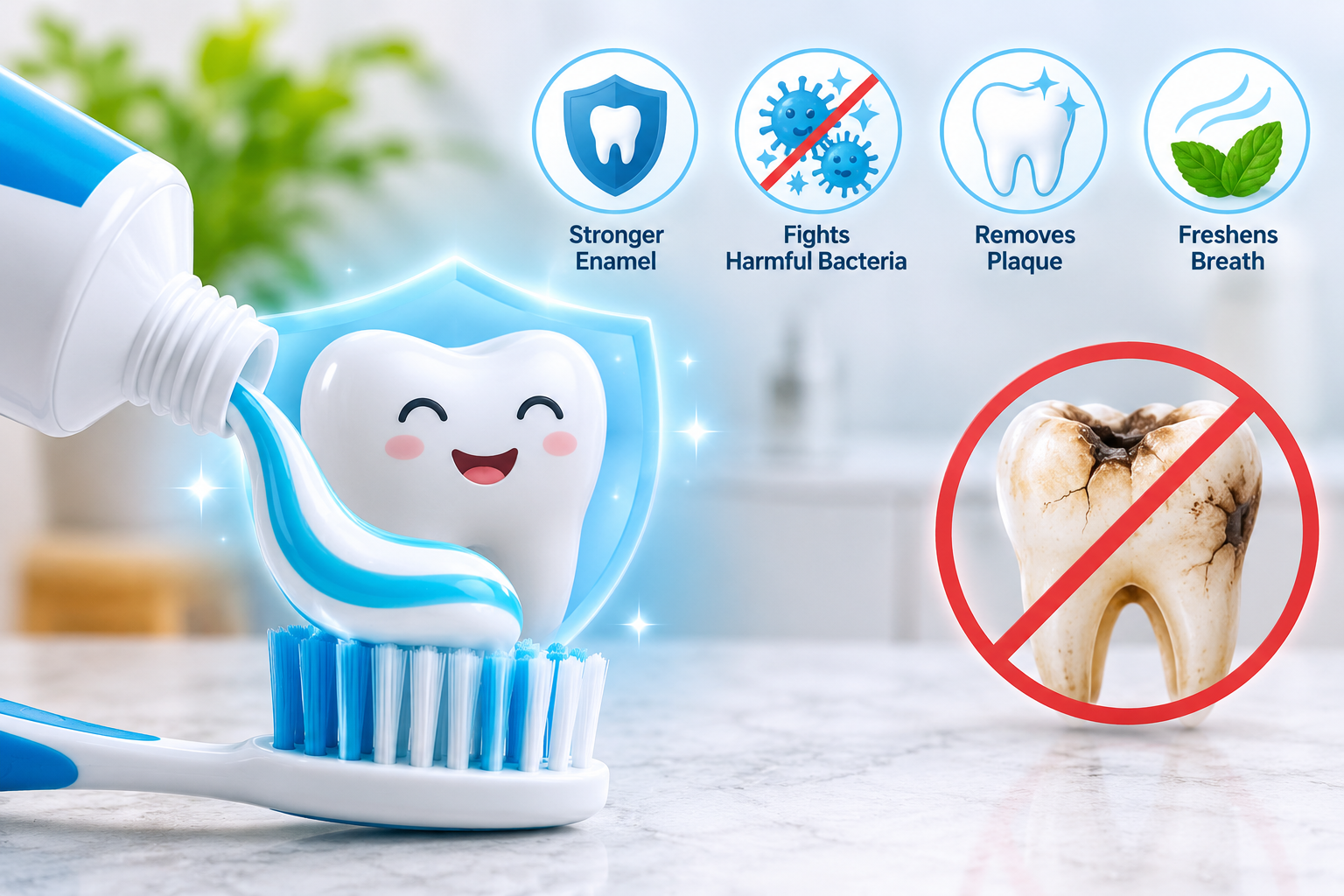
Fluoride is the key ingredient. When it is present in the mouth, it is taken up by the tooth surface as minerals are rebuilt, forming enamel that resists acid better than before. It can reverse very early decay before a cavity forms, and it also slows the growth of acid-producing bacteria. This is why dentists around the world recommend fluoride toothpaste for everyone with teeth.
2. Mild Abrasives Help Remove Plaque
Toothpaste contains gentle polishing agents that help your brush lift plaque and surface stains. Foaming agents spread the paste around the mouth, and flavouring makes brushing pleasant. These do not prevent cavities on their own, but they help the brushing step do its job.
What Does the Research Say?
The evidence for fluoride toothpaste is strong. A study on fluoride toothpastes of different concentrations supports the benefit of fluoride toothpaste in preventing cavities when compared with toothpaste that has no fluoride. The same review notes that evidence on the effect of very specific fluoride strengths is more limited, so higher is not automatically better.
An earlier study on fluoride toothpaste found that toothpastes with at least 1,000 parts per million of fluoride were effective at preventing cavities in children and adolescents. It also noted weak evidence that starting fluoride toothpaste before age one may slightly raise the risk of mild fluorosis, which is why dentists advise using small amounts for young children.
The takeaway is practical. Look for fluoride on the label, use the right amount, and do not rely on toothpaste without it.
How to Choose the Right Toothpaste
- Check the ingredients list for fluoride, often listed as sodium fluoride or sodium monofluorophosphate.
- Look for a fluoride level of around 1,000 to 1,500 parts per million for most people.
- Choose a children’s formula with age-appropriate fluoride and a flavour your child will happily accept.
- Pick a sensitivity formula if hot or cold drinks cause sharp pain, and still make sure it has fluoride.
- Treat whitening and charcoal pastes with caution, because abrasive ones can wear enamel over time.
Some newer ingredients, such as hydroxyapatite, are being studied as alternatives or additions. Their evidence is less established than fluoride, so ask your dentist before switching, especially if you are prone to cavities.
How to Use Toothpaste Properly
Even the best toothpaste works only when used correctly. Follow these steps:
- Brush twice a day for two minutes, including once at night before sleep.
- Use a pea-sized amount for adults and children over three, and a smear for younger children.
- Spit out the foam but do not rinse with water, so fluoride stays on your teeth.
- Wait at least thirty minutes after acidic foods or drinks before you brush.
- Supervise children until they can brush well and have learned to spit, not swallow.
Common Myths About Toothpaste and Cavities
More Toothpaste Means Cleaner Teeth
A large blob does not clean better. A pea-sized amount delivers enough fluoride, and extra paste only adds foam and waste.
Natural or Herbal Toothpaste Is Always Better
Many natural pastes contain no fluoride, which means they lack the ingredient with the strongest evidence for preventing decay. Natural ingredients can be pleasant, but check the label.
Toothpaste Alone Is Enough
Toothpaste cannot clean between teeth, and it cannot cancel out constant sugary snacking. Flossing, a balanced diet and regular dental check-ups remain essential.
Beyond Toothpaste: Other Ways to Prevent Cavities
- Floss or use interdental brushes daily to clean the tight spaces your brush cannot reach.
- Limit how often you snack on sugary foods and sweet drinks, not just how much.
- Drink plenty of water, since saliva is your natural defence against acid and decay.
- Ask your dentist about fluoride varnish and sealants if you or your child are cavity-prone.
- Visit a dentist every six months for a check-up and professional cleaning.
When to See a Dentist
Book a visit if you notice any of the following, because early cavities are easy to treat and can often be reversed:
- White chalky patches or brown spots on the teeth that were not there before.
- Sensitivity to sweets, hot or cold that lingers or keeps getting stronger.
- A visible hole, rough edge or food that keeps getting stuck in one place.
- Toothache that wakes you at night, which can signal deeper decay.
How Amend Dental Can Help
A cavity caught early is cheaper, quicker and far more comfortable to treat than one that has been ignored. Amend Dental, offers friendly, preventive care for the whole family. Book your check-up today and let our team help you choose the right toothpaste and routine for your smile.
Frequently Asked Questions
Does toothpaste really prevent cavities?
Yes, when it contains fluoride and is used twice a day. Clinical reviews show fluoride toothpaste prevents more cavities than toothpaste without it.
What is the most important ingredient in toothpaste for cavity prevention?
Fluoride. It strengthens enamel, helps repair early damage and makes teeth more resistant to acid.
Is fluoride toothpaste safe for children?
Yes, in the right amount. Use a smear for children under three and a pea-sized amount for ages three and up, and supervise brushing so they spit it out.
Can toothpaste reverse a cavity?
Fluoride can repair very early enamel damage, but once a hole has formed, it needs a filling or other treatment from a dentist.
Is natural toothpaste as good as fluoride toothpaste?
Not necessarily. Many natural pastes contain no fluoride, which is the ingredient best supported for preventing cavities. Check the label.