Clear aligners are supposed to be invisible, but a cloudy, yellowed, or smelly tray defeats the entire purpose of choosing a discreet orthodontic option. The plastic trays sit against your teeth and gums for 20 to 22 hours a day, which means saliva, food particles, plaque, and bacteria build up quickly if cleaning is skipped.
The good news is that stains and odors are almost always preventable and reversible with the right daily routine and a few deep cleaning tricks. This guide walks through exactly how to keep your aligners clear, fresh, and safe to wear, based on dental hygiene best practices rather than internet myths.
Why Clear Aligners Stain and Start to Smell
Aligner trays are made of a thin, flexible plastic that is porous enough to trap bacteria, plaque, and pigments from food and drink. Unlike teeth, which are protected by enamel and regularly cleaned with brushing, aligners have no natural defense against staining agents. Coffee, tea, red wine, turmeric based foods, and tobacco are some of the biggest culprits behind yellow or brown discoloration.
Odor develops for a different but related reason. Saliva and food debris left on the tray feed bacteria, and those bacteria release sulfur compounds as a byproduct, which is the same process responsible for bad breath. Wearing aligners for most of the day without removing them for meals or cleaning simply speeds up this bacterial buildup.
Daily Cleaning Habits That Prevent Stains and Odors
Most aligner odor and discoloration problems can be avoided entirely with a consistent daily routine. Dentists generally recommend the following habits:
- Rinse your aligners with lukewarm water every single time you remove them from your mouth.
- Brush your teeth and floss before putting the aligners back in, not after, to avoid trapping food particles.
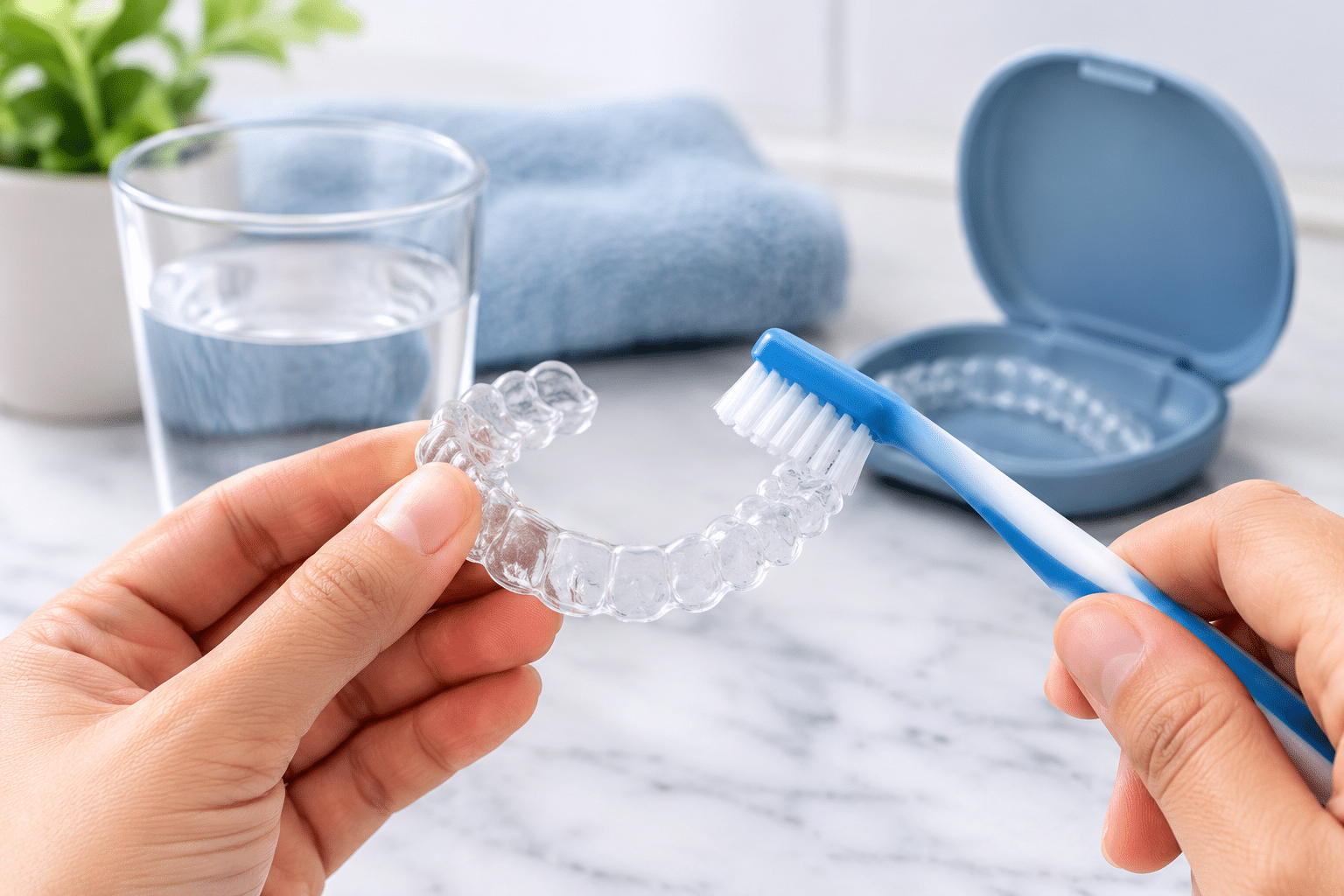
- Use a soft-bristled toothbrush dedicated only to your aligners, never a shared or abrasive brush.
- Avoid hot water completely, since heat can warp the plastic and ruin the fit permanently.
- Soak your trays once daily in a cleaning solution made for clear aligners or retainers.
- Remove aligners before eating or drinking anything except plain water, every single time.
- Store aligners in their case when not worn, never wrapped in tissue or left exposed on a counter.
- Clean your aligner case itself at least once a week with warm soapy water.
These habits take less than five minutes a day but prevent the vast majority of staining and odour issues before they start.
Deep Cleaning Methods for Stained or Smelly Aligners
If stains or odour have already set in, daily rinsing alone will not be enough. These deep cleaning methods are safe, affordable, and widely recommended by dental professionals.
Denture or Aligner Cleaning Tablets
Effervescent cleaning tablets designed for dentures or clear aligners are one of the most reliable options available. Simply dissolve a tablet in lukewarm water, soak the aligner for 15 to 30 minutes, then rinse thoroughly before wearing. The fizzing action lifts bacteria and light staining without scratching the plastic surface.
Distilled White Vinegar Soak
A mixture of equal parts distilled white vinegar and lukewarm water makes an effective natural soak. Vinegar has mild antibacterial and antifungal properties that help break down buildup and neutralise odour-causing bacteria. Soak the aligners for 15 to 20 minutes, then brush gently with a soft toothbrush and rinse well, since leftover vinegar can leave a sour taste.
Baking Soda Paste
Baking soda is a gentle abrasive that can lift surface stains without damaging the plastic when used correctly. Mix a small amount with water to form a paste, apply it with a soft brush, and rub gently for about two minutes before rinsing thoroughly. Avoid scrubbing too hard, since excessive pressure can create micro-scratches that actually trap more bacteria over time.
Hydrogen Peroxide Soak
A diluted hydrogen peroxide solution, generally one part peroxide to two parts water, can help whiten mild discolouration and disinfect the tray. Limit soaking time to 10 to 15 minutes and rinse the aligner extremely well afterwards, since peroxide residue is unpleasant and potentially irritating if swallowed.
Specialised Aligner Cleaning Devices
Ultrasonic cleaning devices designed specifically for aligners and retainers use high-frequency sound waves to dislodge bacteria and debris from every surface, including tiny grooves that brushing cannot reach. These devices are a worthwhile investment for people who wear aligners long term or who are prone to frequent staining.
What to Avoid When Cleaning Clear Aligners
Certain popular cleaning methods actually do more harm than good, and avoiding them protects both the trays and your oral health.
- Never use colored or flavoured mouthwash to soak aligners, since the dyes themselves can cause staining.
- Avoid toothpaste with whitening agents or abrasive particles, which can scratch and cloud the plastic surface.
- Do not use hot or boiling water at any point, as it permanently warps the aligner shape.
- Skip bleach or any harsh chemical cleaner, since these can be toxic if residue remains on the tray.
- Avoid chewing gum while wearing aligners, as it sticks to the plastic and is difficult to remove.
- Do not smoke or vape while aligners are in place, since this causes severe and rapid discolouration.
Targeted Tips for Odour Control
Beyond general cleaning, a few habits specifically target bacterial odour rather than visible staining. Rinsing aligners immediately after removal, even for a quick snack, prevents bacteria from settling into the plastic. Staying well hydrated throughout the day also helps, since dry mouth accelerates bacterial growth and worsens both breath and aligner odour.
Many patients also find it helpful to carry a small travel case with a spare toothbrush and travel-sized cleaning solution so the routine does not get skipped when away from home. For patients dealing with persistent dry mouth during treatment, our blog on [managing dry mouth with orthodontic appliances] has more detailed guidance.
When to Replace Your Aligners Instead of Cleaning Them
Even with diligent care, aligners are not meant to last forever. If a tray develops deep scratches, persistent cloudiness that does not clear with cleaning, a lingering odour despite proper care, or visible cracks, it is time to move to a replacement rather than continuing to clean it. Wearing a compromised aligner can actually trap more bacteria in the damaged areas and may affect how well the tray fits against your teeth.
Most treatment plans already include a set of trays that you change every one to two weeks, so minor wear is normal, but tell your orthodontist about anything beyond normal use. Learn more about how orthodontists plan and change aligner sets in our article on [how many aligners you need during treatment].
Final Thoughts
Keeping clear aligners free of stains and odors comes down to consistency rather than any single miracle product. A simple daily routine of rinsing, brushing, and soaking, combined with an occasional deep clean using tablets, vinegar, or diluted peroxide, will keep your trays looking and smelling fresh throughout treatment.
Avoiding known culprits like colored mouthwash, hot water, and smoking protects both the aligner and your overall oral hygiene. If stains, odor, or discomfort persist despite proper cleaning, it is a sign to get your aligners and bite checked by a professional rather than continuing to troubleshoot at home.
If you are currently in aligner treatment or considering clear aligners for the first time, the team at Amend Dental Center can evaluate your progress, answer questions about your specific aligner brand, and help you stay on track for a confident, healthy smile. Ready to keep your aligners clear and fresh? Book a consultation with Amend Dental Center today and get a personalized treatment plan.
Frequently Asked Questions
Can you fix stained clear aligners, or do you need to replace them?
You can usually remove light to moderate staining with soaking methods like cleaning tablets, diluted vinegar, or diluted hydrogen peroxide. Deep set stains, cracks, or cloudiness that does not improve after cleaning usually mean it is time to move on to the next tray in your series.
How often should I clean my clear aligners?
Rinse your aligners every time you remove them, and give them a full soak and gentle brushing at least once a day, ideally as part of your nightly oral care routine.
Is it safe to use mouthwash to clean clear aligners?
Clear, alcohol-free mouthwash is generally fine for brief use, but avoid colored or flavored mouthwash, since the dyes can stain the plastic over time.
Why do my aligners smell bad even though I clean them daily?
Persistent odor usually means bacteria are hiding in hard-to-reach grooves, you are not cleaning your aligner case, or dehydration is reducing your saliva flow and letting bacteria thrive.
Can I use regular toothpaste to clean my aligners?
Regular toothpaste, especially whitening or gritty formulas, can scratch the aligner surface. A soft brush with water, a mild soap, or a dedicated aligner cleaner is a safer choice.
How long should I soak my aligners in a cleaning solution?
Most cleaning tablets, vinegar solutions, and diluted hydrogen peroxide work effectively within 15 to 30 minutes. Soaking longer than recommended does not improve results and may damage the plastic.