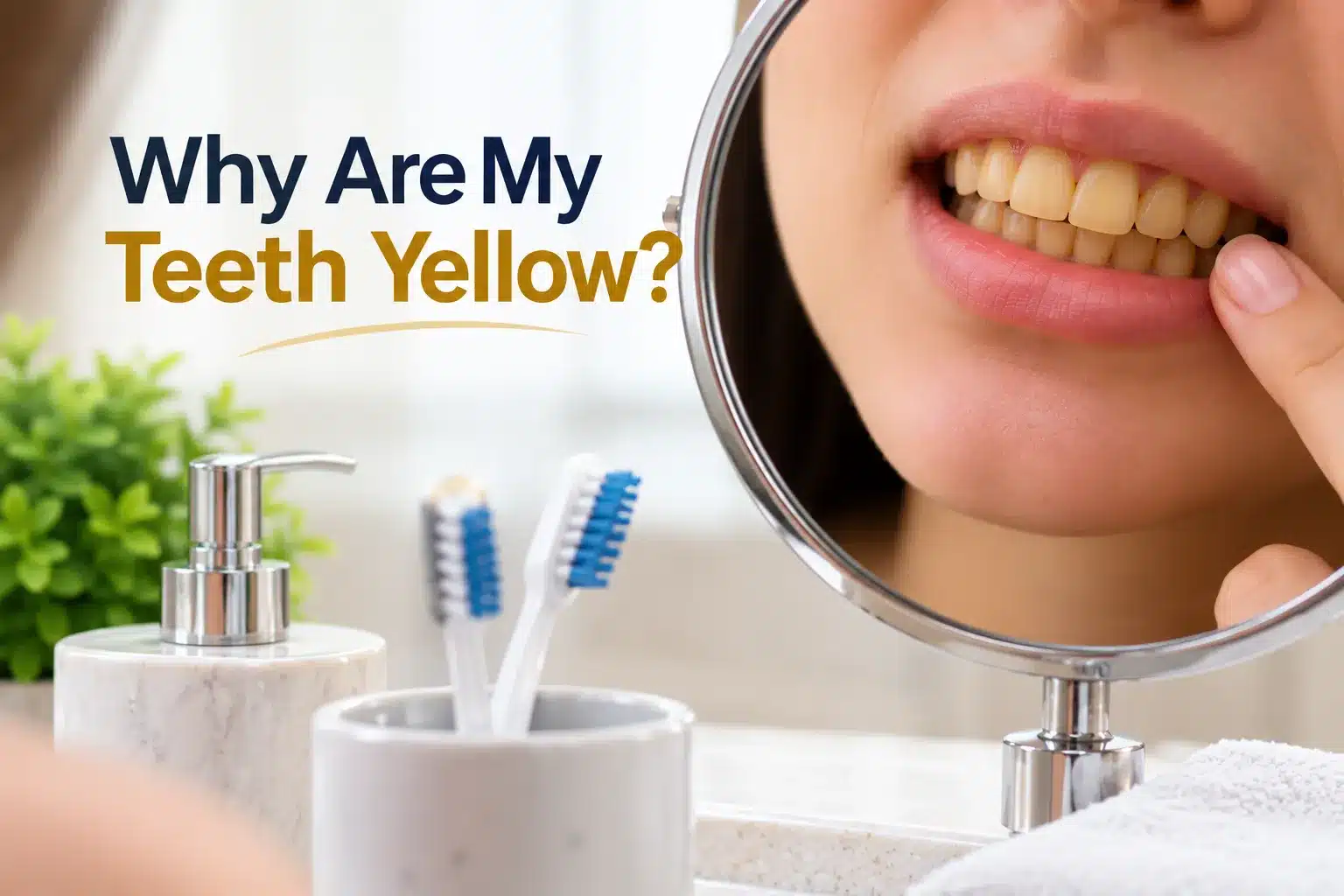
Most people notice it in the bathroom mirror first. The smile that once looked bright now seems a shade or two darker, even though you brush twice a day. It is a frustrating experience, and it often leads to one worrying question: is something wrong with my teeth? The answer is usually reassuring. Yellow teeth are extremely common, and in most cases the cause is either everyday staining or the natural structure of the tooth itself rather than a serious disease.
This guide explains exactly why teeth turn yellow, what dental research says about the different types of discolouration, which causes are fixable at home, and when it is time to visit a dental clinic in Calicut for a proper diagnosis and professional treatment.
Why Do Teeth Look Yellow in the First Place?
To understand yellow teeth, it helps to know how a tooth is built. The outer layer, enamel, is hard, whitish and semi-translucent. Beneath it lies dentin, a denser layer that is naturally yellow to brownish in colour. What you see as tooth shade is actually a blend of both layers, with light passing through the enamel and reflecting off the dentin underneath. This is why two people with perfectly healthy teeth can have very different natural shades, since enamel thickness and dentin colour vary from person to person.
A Cleveland Clinic overview of tooth discolouration explains that as enamel thins with age, more of the yellowish dentin becomes visible, and that genetics, dental trauma and dark foods and drinks all influence how yellow teeth appear. In other words, yellowing is often a combination of structure, lifestyle and time rather than a single cause.
What Does Research Say About Tooth Discolouration?
Dental literature groups discolouration into extrinsic and intrinsic types. A clinical review titled Tooth Discoloration: Causes and Clinical Presentation describes extrinsic stains as deposits on the outer tooth surface, while intrinsic discolouration involves structural changes in the enamel or dentin, such as fluorosis, enamel hypoplasia or medication-related staining. The review also notes that intrinsic stains are harder to remove than extrinsic ones, which is exactly why some yellow teeth respond to a simple cleaning and others do not.
Adult teeth tend to look more yellow than those of younger people because enamel thins from wear while dentin thickens through the deposition of secondary dentin. The same study summary lists causes of intrinsic discolouration including pulp death, enamel defects, decay and certain antibiotics.
Taken together, the research makes one point clear. Yellow teeth are rarely a mystery. They almost always trace back to identifiable causes, and identifying the right one is what determines which treatment will actually work.
The Two Main Types of Yellow Teeth
- Extrinsic Stains: Yellowing on the Surface
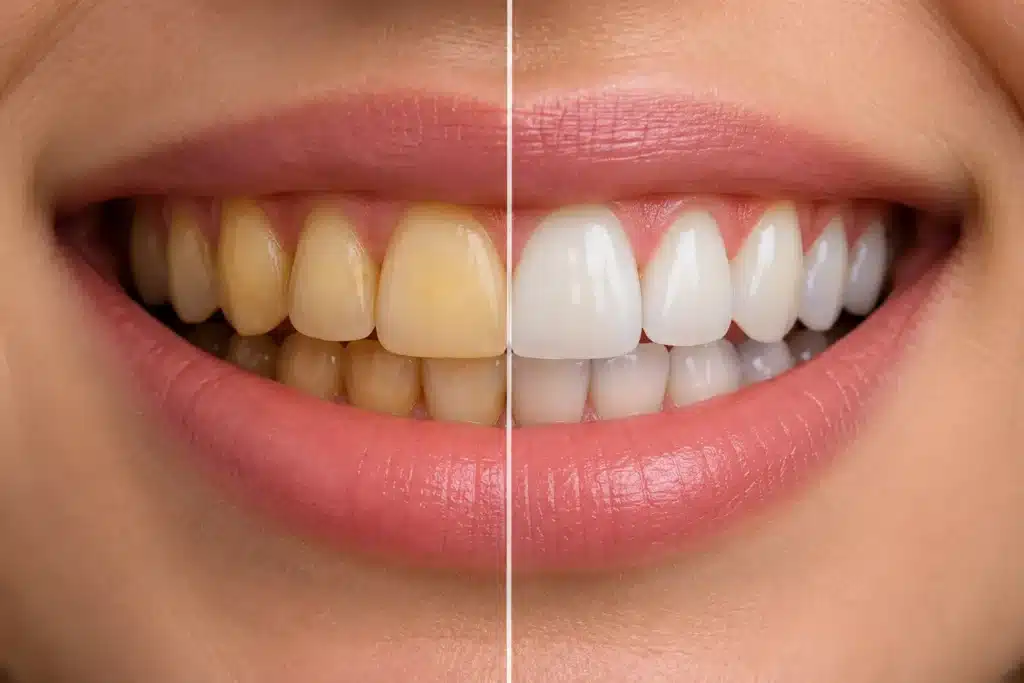
Extrinsic stains form when pigmented compounds from food, drinks, tobacco or bacteria attach to the enamel surface and its microscopic irregularities. They are the most common reason for yellowing and the easiest to treat. Regular brushing, professional scaling and polishing, and whitening treatments typically lift them effectively.
- Intrinsic Discolouration: Yellowing From Within
Intrinsic discolouration occurs inside the tooth structure, either during development or later in life. Because the pigment sits within the enamel or dentin, brushing or ordinary cleaning cannot remove it. These cases often need professional whitening, bonding, veneers or crowns, depending on severity.
Common Causes of Yellow Teeth
Here are the most frequent reasons teeth turn yellow, based on both clinical research and everyday dental practice.
- Coffee, Tea, Red Wine and Dark Foods
Drinks and foods rich in tannins and dark pigments stain enamel gradually. Tea and coffee are especially common culprits in India, where many people drink them several times a day, and sipping slowly keeps the teeth in repeated contact with the stain.
- Tobacco and Smoking
Tobacco leaves tar and nicotine residue on the enamel that darkens from yellow to brown over time. Chewing tobacco, paan and gutka cause similar staining, along with a significantly higher risk of gum disease and oral cancer.
- Poor Oral Hygiene and Plaque Buildup
Plaque is naturally pale yellow, and when it hardens into tartar it becomes a rough, discoloured layer that attracts even more stains. Inconsistent brushing and skipped flossing allow this buildup to spread, particularly near the gum line.
- Enamel Thinning and Erosion
Acidic foods, fizzy drinks, acid reflux and aggressive brushing slowly wear down enamel. As the protective layer thins, the yellow dentin beneath becomes more visible, and this type of yellowing cannot simply be scrubbed away.
- Ageing
Over the years, enamel wears down while dentin continues to build up, so teeth naturally shift toward a yellower shade. This happens even with excellent oral hygiene, which is why age-related yellowing is considered normal.
- Medications
Certain antibiotics such as tetracycline and doxycycline, when taken during tooth development, can cause lasting grey or yellow-brown intrinsic stains. Some antihistamines, blood pressure medicines and antiseptic mouthwashes containing chlorhexidine can also contribute to staining.
- Dental Trauma and Dying Teeth
A tooth that has been injured or has an untreated infection can darken or turn yellow-grey as the nerve inside loses vitality. A single tooth that changes colour compared with its neighbours is a warning sign that deserves prompt attention.
Are Yellow Teeth a Sign of Cavities or Disease?
Not by themselves. Yellow teeth are often the result of enamel thinning, natural dentin colour or surface staining, whereas cavities are areas of decay caused by bacteria and usually look brown, black or chalky white in a specific spot. That said, certain patterns deserve a dental visit:
- A single tooth turning yellow, grey or dark while the others stay a normal shade.
- Yellowing together with tooth sensitivity, pain or swelling in the surrounding gum.
- Dark pits, spots or lines on the teeth that seem to be getting larger over time.
- Rapid colour change over a few weeks rather than the gradual shift seen with age.
How to Prevent and Reduce Yellow Teeth
While genetics and ageing cannot be changed, several habits make a noticeable difference to how bright your smile stays.
- Brush twice daily with fluoride toothpaste and floss once a day to stop plaque from building up.
- Rinse your mouth with water after tea, coffee, red wine or highly coloured foods and sauces.
- Use a straw for dark or fizzy drinks so the liquid touches the front teeth less often.
- Avoid tobacco, paan and gutka, which are among the strongest causes of stubborn staining.
- Limit acidic foods and wait around thirty minutes before brushing so softened enamel can recover.
- Book a professional cleaning every six months to remove tartar and surface stains early.
Professional Treatments for Yellow Teeth
When home care is not enough, dentists have several effective options, and the right choice depends entirely on the cause.
- Professional scaling and polishing removes tartar and surface stains that brushing cannot reach.
- In-clinic teeth whitening lightens both surface and some deeper stains safely and predictably.
- Dental bonding covers small areas of discolouration or damaged enamel with tooth-coloured resin.
- Porcelain or ceramic veneers mask stubborn intrinsic stains and reshape uneven teeth at once.
- Crowns restore and recolour teeth that are heavily damaged, discoloured or weakened after treatment.
For patients whose yellowing is part of a larger cosmetic concern, such as chips, gaps or uneven shape, Amend Dental offers smile correction using veneers, crowns and restorative procedures planned around your natural face and smile. A single darkened tooth that has lost its nerve may first need microscopic root canal treatment before its colour can be corrected, and patients who also want better alignment can explore invisible aligners as part of a complete smile plan.
How Amend Dental Approaches Yellow Teeth
At Amend Dental, yellow teeth are never treated with a one-size-fits-all solution. The clinic starts with a careful examination to determine whether the discolouration is extrinsic, intrinsic or a combination, checks for underlying decay, gum disease or nerve damage, and then recommends the least invasive treatment that will achieve a natural, balanced result.
Yellow Teeth Are Common and Treatable
Yellow teeth can feel like a personal failing, but the science says otherwise. They are usually the result of ordinary things such as tea, coffee, ageing, enamel thinning or genetics, and in most cases they can be improved with the right approach. The key is knowing which type of discolouration you have, because that decides whether a better routine, a professional cleaning, whitening or a restorative treatment will give you the result you want. A short consultation answers that question quickly and saves months of trial and error with products that were never going to work.
Ready for a Brighter, Healthier Smile?
Instead of guessing which product might work, find out exactly why your teeth are yellow. Amend Dental is the best dental clinic in Calicut that offers a thorough examination and a treatment plan built around your natural smile.
Frequently Asked Questions
- Why are my teeth yellow even though I brush every day?
Brushing removes surface plaque but cannot change the natural dentin colour beneath the enamel. If your enamel is thin, or the stains are intrinsic, yellowing can persist despite excellent hygiene.
- Are yellow teeth unhealthy?
Not necessarily. Many people with naturally yellowish teeth have strong, healthy enamel. Yellowing becomes a concern only when it appears suddenly, affects a single tooth or comes with pain or sensitivity.
- Can yellow teeth become white again?
Surface stains usually respond well to professional cleaning and whitening. Deeper intrinsic discolouration may need bonding, veneers or crowns for a lasting improvement.
- Where can I get yellow teeth treated in Kerala?
Amend Dental offers diagnosis and cosmetic treatment across its clinics in Calicut, Kannur, Thalassery, Nadapuram and Kottakkal. Explore more on the dental services page.