For most adults, a titanium implant with a moderately rough surface, placed by an experienced implant dentist after proper 3D planning, is the best choice for long-term oral health. Zirconia is a reasonable alternative for patients with metal sensitivity or very visible front teeth. The material matters, but the dentist, the planning and your daily aftercare matter just as much.
Key takeaways
- Titanium is still the gold standard. Systematic reviews report 10-year survival rates of roughly 93% to 96%.
- Prospective studies that followed implants for 20 years or more report survival of about 93%.
- Zirconia is promising and looks natural, but its long-term evidence is still limited.
- About one in five patients develops peri-implantitis, so hygiene and follow-up visits decide long-term success.
- Smoking, diabetes and untreated gum disease raise the risk of implant problems.
If you are replacing a missing tooth, you have probably run into a wall of terms: titanium, zirconia, mini implants, All-on-4, bone grafts. It is hard to know what actually protects your mouth ten or twenty years from now.
This guide explains the main implant types in plain language, shows what published research says about each, and gives you a short checklist to take to your consultation.
What Does “Best” Mean for a Dental Implant?
There is no single best implant for everyone. The best implant is the one that stays firmly in the bone, keeps the gum around it healthy, and can be cleaned easily for decades. In practice, dentists judge an implant on a handful of factors:
- Survival: does the implant stay in place over many years?
- Bone stability: is the surrounding jawbone preserved, or does it slowly shrink?
- Gum health: does the soft tissue stay pink, firm and free of infection?
- Fit with your bite: can the implant handle the chewing forces in your mouth?
- Cleanability: can you and your dentist keep the area clean?
- Appearance: does the final tooth blend in with your smile?
Notice that only one of these six points is about the material itself. The rest depend on planning, technique and care. That is why two patients with the same implant brand can have very different outcomes.
Dental Implant Types at a Glance
Implants can be grouped in four useful ways.
By position in the jaw
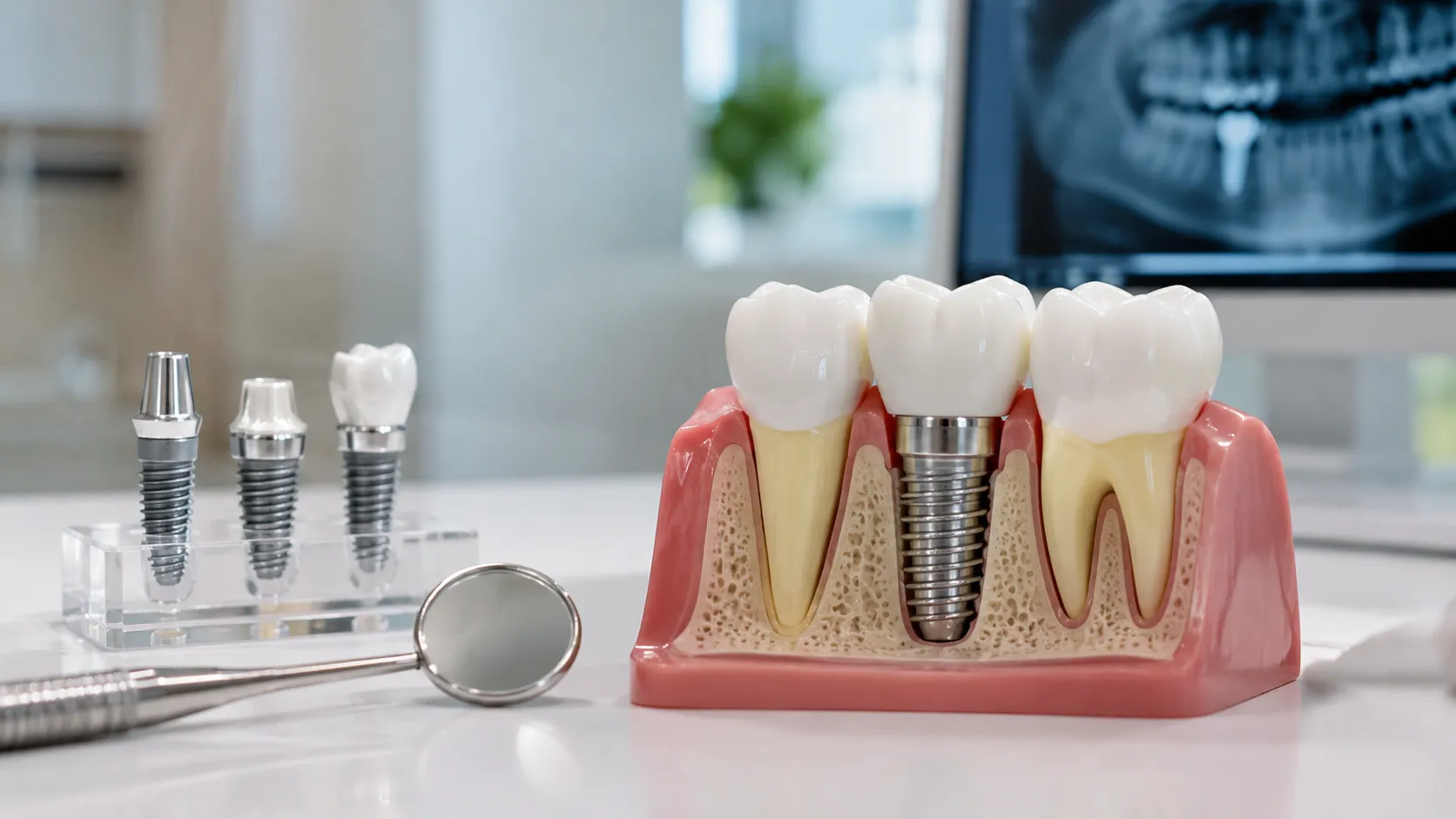
- Endosteal implants are small screw-shaped posts placed directly into the jawbone. They are by far the most common type, and the one most studies are about.
- Subperiosteal implants sit on top of the bone, under the gum. They are rarely used today and are reserved for unusual cases.
- Zygomatic implants anchor in the cheekbone. They are a specialist alternative for severe upper jaw bone loss.
By size
- Standard implants are the default for replacing single teeth, bridges and full arches.
- Mini implants are narrower, usually under 3 mm. They can help stabilise a lower denture, but they are generally not chosen for molars because they are less robust.
By material
- Titanium or titanium alloy: the most researched option, with more than 50 years of clinical use.
- Zirconia (ceramic): a tooth-coloured, metal-free option that is newer to the market.
By the tooth it supports
- Single-tooth implant: one implant, one crown.
- Implant-supported bridge: two or more implants carry a bridge of several teeth.
- Full-arch rehabilitation: a set of implants supports a complete arch of teeth. You can read more about this in Amend’s page on full mouth rehabilitation.
Titanium vs Zirconia: What the Research Says
This is the question most patients ask, so it deserves a careful answer.
Titanium has the longest track record. A systematic review in the International Journal of Oral and Maxillofacial Surgery pooled 23 studies and more than 7,700 implants followed for an average of 13.4 years. It found a cumulative survival rate of 94.6% and average marginal bone loss of only 1.3 mm. Titanium also bonds to bone in a process called osseointegration, which is the reason implants feel so stable.
Zirconia is catching up, but the data is thin. A 2024 meta-analysis of randomized trials in the Journal of Clinical Medicine compared zirconia and titanium implants after one year. Titanium showed better survival and less marginal bone loss. However, the review included only six trials and 448 implants, so the evidence base is small.
Laboratory and animal data point the same way. A preclinical meta-analysis in Clinical Oral Implants Research found similar soft and hard tissue integration for both materials, although titanium tended to integrate with bone faster at the start.
What this means for you:
- If your priority is long-term predictability, titanium is the safer bet today.
- If you have a confirmed titanium allergy, or you need a very natural look in the front of the mouth, zirconia may be worth discussing.
- Whichever you choose, ask your dentist what published evidence supports the specific system they use.
Surface, Design and Brand: Do They Matter?
Yes, but less than most marketing suggests.
- Surface texture. Modern implants usually have a moderately rough surface that helps bone attach. Studies link moderately rough surfaces with a lower prevalence of peri-implantitis. The evidence is not unanimous, though.
- Design and connection. Screw-shaped titanium implants are the design behind most long-term data. Within that group, small design differences matter less than correct size, position and angle for your bone.
- Brand. Choose a system with a long published track record and easy access to spare parts. This matters if you ever need a repair or crown replacement years later, possibly at a different clinic. It is perfectly reasonable to ask your dentist which system they plan to use and why.
The Biggest Threat to Long-Term Success: Peri-Implantitis
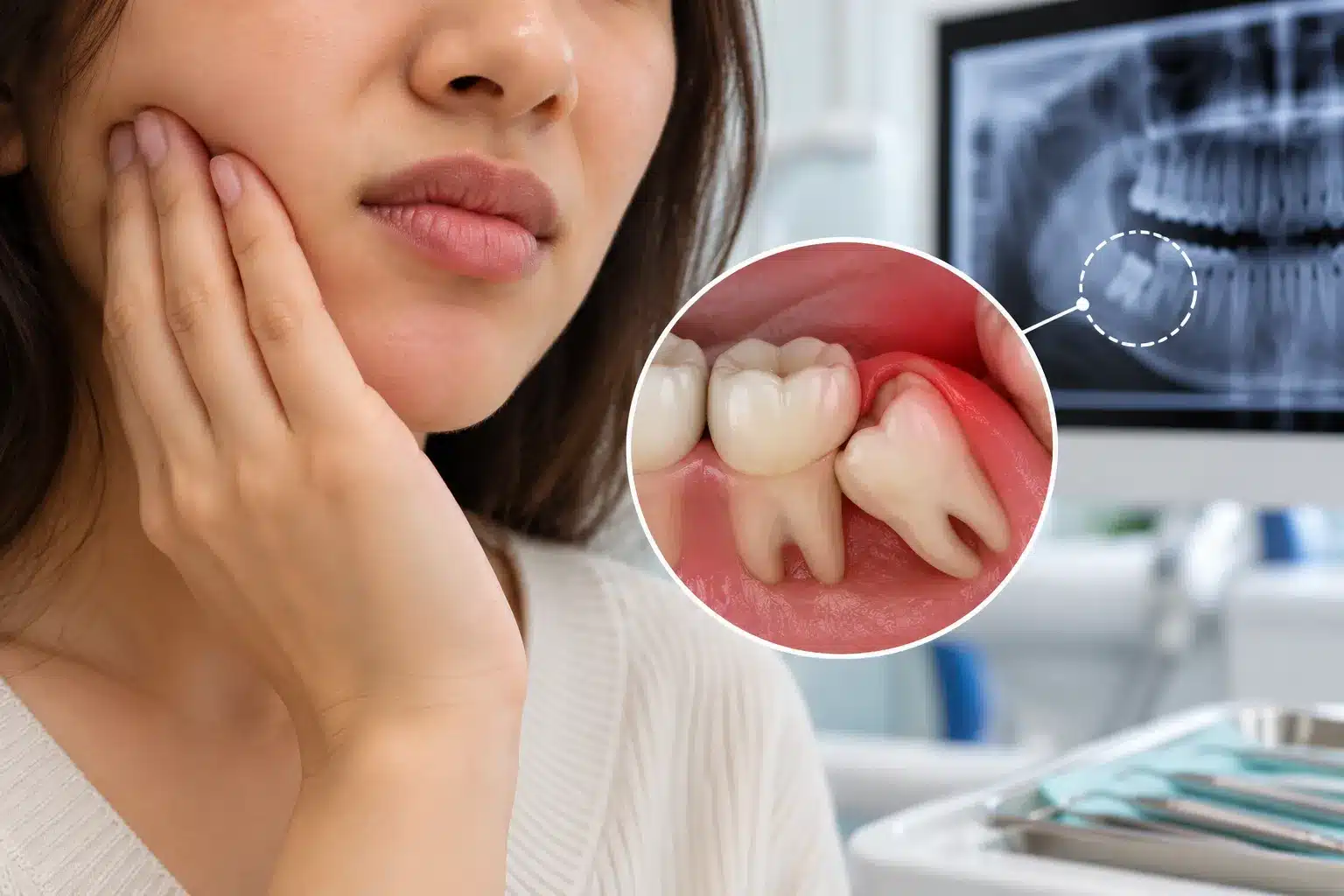
Implants cannot decay, but the tissues around them can become infected. This is called peri-implantitis, and it is the main reason implants fail late.
- Peri-implant mucositis is early inflammation of the gum around the implant. It is reversible with good cleaning.
- Peri-implantitis is deeper infection that destroys the supporting bone.
An AO/AAP systematic review of 102 studies found that 46% of patients with implants had peri-implant mucositis and 21% had peri-implantitis. The same AO/AAP review identified the main risk indicators: periodontitis, diabetes, smoking and alcohol consumption. In other words, the health of your gums and your lifestyle can influence implant success more than the brand on the box. If you already have gum problems, treating them first is essential.
Which Implant Suits Which Patient?
Use this as a starting point, not a prescription. Only a clinical examination and a 3D scan can confirm what is right for you.
- Healthy adult, one missing tooth: a standard titanium implant with a custom crown.
- Several missing teeth in a row: two or more titanium implants supporting a bridge.
- Metal sensitivity or a very thin gum in the front smile zone: discuss zirconia, and ask about its limitations.
- Loose lower denture: mini or standard implants to anchor the denture, depending on bone.
- Little bone height: a bone graft, sinus lift or specialist implant may be needed first.
- Smoker or diabetic: implants are often still possible, but you will need better control of these factors and closer follow-up.
- Teeth grinder: a night guard to protect the implant crown.
Questions to Ask Before You Choose an Implant
Take this list to your consultation.
- Which implant system and material do you recommend for my case, and why?
- Will you take a 3D scan to plan the position and check my bone?
- Who will place the implant, and how many have they done?
- How will you treat any gum disease before surgery?
- What is the full cost, including the crown, and what does the warranty cover?
- How often will I need follow-up visits?
How to Make Your Implant Last for Decades
Once the implant is in, your habits take over.
- Brush twice daily with a soft brush and clean around the implant crown carefully.
- Clean between teeth with interdental brushes or a water flosser every day.
- See your dentist every six months for a check-up and professional cleaning.
- Do not smoke. It is one of the strongest risk indicators in the research above.
- Keep diabetes well controlled and report any bleeding or swelling around the implant early.
- Protect against grinding with a night guard if advised.
Choose the Whole Plan, Not Just the Implant
The implant that serves you best is a well-researched titanium implant, placed in healthy bone by an experienced dentist, and protected by good home care. Zirconia has a place in selected cases, but titanium remains the most proven option. Above all, remember that gum health and regular follow-up decide long-term success more than any brand name.
If you are searching for the best clinic in Malappuram to plan your implant treatment, Amend Dental Centre is a practical place to start. The team offers a free 3D scan and a personalised plan, with implantology available across its Calicut, Kannur, Thalassery, Nadapuram and Kottakkal branches. Patients travelling from abroad can also explore the international patients programme .
Book your implant consultation at Amend Dental Centre or call +91 8848 282 800. Your future smile deserves a plan built to last.
Frequently Asked Questions
- Which dental implant lasts the longest?
Titanium implants have the longest evidence, with around 93% survival at 20 years in prospective studies. Zirconia has promising short-term results but fewer long-term studies.
- Is a titanium or zirconia implant better?
For long-term predictability, titanium is currently better supported by research. Zirconia can be a good choice for confirmed metal allergy or highly visible front teeth.
- Can a dental implant last a lifetime?
Many do. Survival rates stay high over 20 years, but lifelong success depends on gum health, hygiene, regular check-ups and avoiding smoking.
- Are mini implants as good as regular implants?
Not for every situation. Mini implants can stabilise a lower denture, but standard implants are usually preferred for single teeth and molars.
- What is the most common reason implants fail?
Early failures are usually due to poor bone integration. Late failures are most often linked to peri-implantitis, which is why cleaning and follow-up visits are so important.
- How much do dental implants cost in Calicut?
The cost depends on the implant system, the material, the number of implants, any bone grafting and the type of crown. Ask for a written estimate that includes everything, and compare it with the same items at other clinics.
This article is for general information and does not replace a personal dental examination.
Sources
- Long-term (10-year) dental implant survival, Journal of Dentistry (2019)
- A 20-year meta-analysis of dental implant survival rates, Clinical Oral Investigations (2024)
- Dental implant survival and marginal bone loss after a minimum of 20 years, IJOMS (2026)
- Zirconia versus titanium dental implants, Journal of Clinical Medicine (2024)
- Survival and success of zirconia compared with titanium implants, Clinical Oral Investigations (2023)
- AO/AAP systematic review of peri-implant diseases